 Miriam-Rose LeDuc
How Schema Markup Boosts AI Visibility by 55% (Case Study)

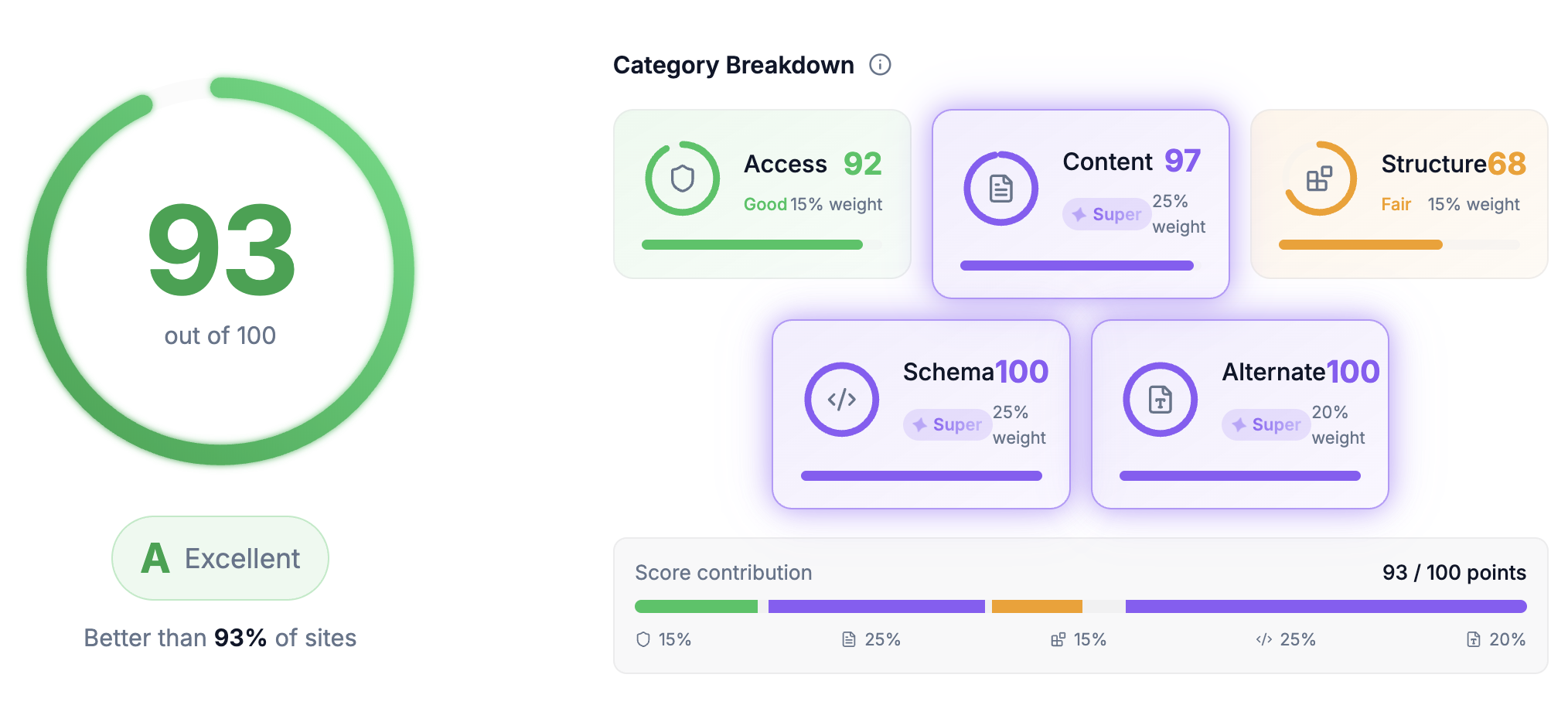
What’s your website’s AI visibility score? If you’re wondering how to get seen and cited by LLMs like ChatGPT and Perplexity, you’re in the right...




This step-by-step visual guide will walk you through the process and help get your website all set up on HubSpot.

No developer is needed. This complete 3-part series includes a step-by-step guide to high-fives all around the office.

Take full advantage of the new and improved HubSpot CMS experience with the CLEAN theme.
Have a question and looking for an answer? I've likely got a video for that or an article that covers it.
Google PageSpeed Insights is the gold standard in analyzing the speed and performance of a website. Here is how CLEAN Pro ranks. Not too shabby for a media-rich page.
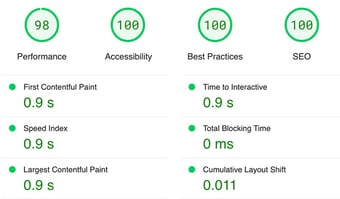
Report generated: Tues, March 7, 2023, based on Home Page - Opt 1.
Is your site being referenced by AI tools like ChatGPT or Perplexity?
You’re about to walk away with a simple framework to boost your content strategy in this new AI-driven discovery landscape.
Spoiler: in 2026, content performance depends on two things, relevance and recency.
Back in October 2025, I noticed something interesting. One of our older blog posts about website trends was getting referenced by large language models like ChatGPT.
On the surface, that’s a win. Something about the post was clearly working.
But there was a problem: the content itself was no longer current.
So I ran a small experiment. I took the exact same structure and format of that discoverable post and created a refreshed version designed specifically for marketers in 2026.
Here’s the data behind the 2023 article that showed AI referrals as the top traffic source in early Q4 2025, with a slow decline as we neared year end.
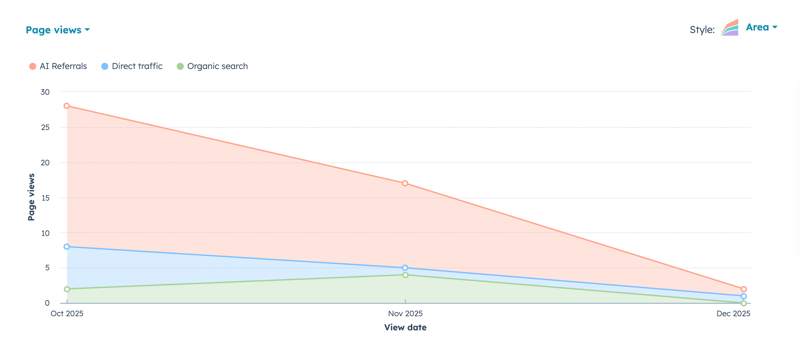
That was when I published the refreshed version.
In early December, I wrote a new Modern Landing Page post for 2026.
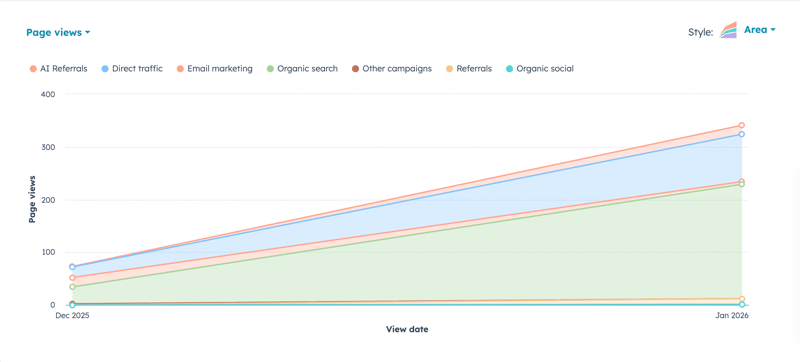
In this case, when all other variables remained largely the same (headings, structure, query intent), the original post started seeing a decline in AI referrals, and the refreshed version began earning new AI referrals within weeks (and organic traffic, too...we'll get to that in a second).
The more recent example won out. But recency wasn’t the only reason the post was getting AI referrals.
So why did the original post get attention from LLms in the first place? One factor was the content structure.
Heading tags have always been part of traditional SEO, and they still matter for AI discoverability. Think of them as a VIP list for crawlers and AI systems: they help machines understand what’s most important on the page and how ideas relate to each other.
Clear structure is visible to humans (through headings and sections), but it also exists behind the scenes. Structured data like schema helps describe what a page is (a blog post, a guide, a comparison).
In short, structure makes your content easier for AI systems to interpret, and easier to surface to human eyeballs.
First, structure your content. Start with heading tags (H1, H2) to format your content titles and subtitles. Try tools like SuperSchema.ai to easily create structured data for your pages without having to code (and publish your schema directly to HubSpot in one click).
Next, do a light quarterly content audit. Are there any outdated screenshots or examples? Could you add a simple “updated for 2026” line for visible freshness?
Pro-tip: the Clean Pro theme automatically gives you an "updated on" blog date so you stay fresh without having to think twice. :)
So what other factors made these blog posts so sexy to the AI tools?
Aside from recency, they succeeded because they served a clear search intent (“show me examples of modern landing pages”), and delivered valuable, visual, actionable content.
Easier said than done, but simple: just answer your audience’s questions. What are they thinking? What do they search for? Meet them where they are.
An excellent philosophy to follow is Marcus Sheridan’s They Ask, You Answer (TAYA). He breaks common audience questions and online search queries down into categories of the Big 5: Cost, Problems, Comparisons, Reviews, and Best in Class.
Use images. My original Modern Landing Page post had original screenshots to educate readers. Since AI can’t recreate real world examples and perspective, it was prime material to serve up to humans searching for landing page inspo.
Now you may have noticed that the new post's organic search traffic got a lift along with AI referrals. And you would be right.
Content is relevant when people search for answers to their questions. So, relevant content is more attractive to humans AND robots, because the AI knows it's surfacing content that people want.
Write posts that answer one clear question with one clear answer.
For example, how can you get your content to appear in AI search results? I’m so glad you asked. Here’s the framework you need:
Want a simple rubric to help you audit your content for AI discoverability?
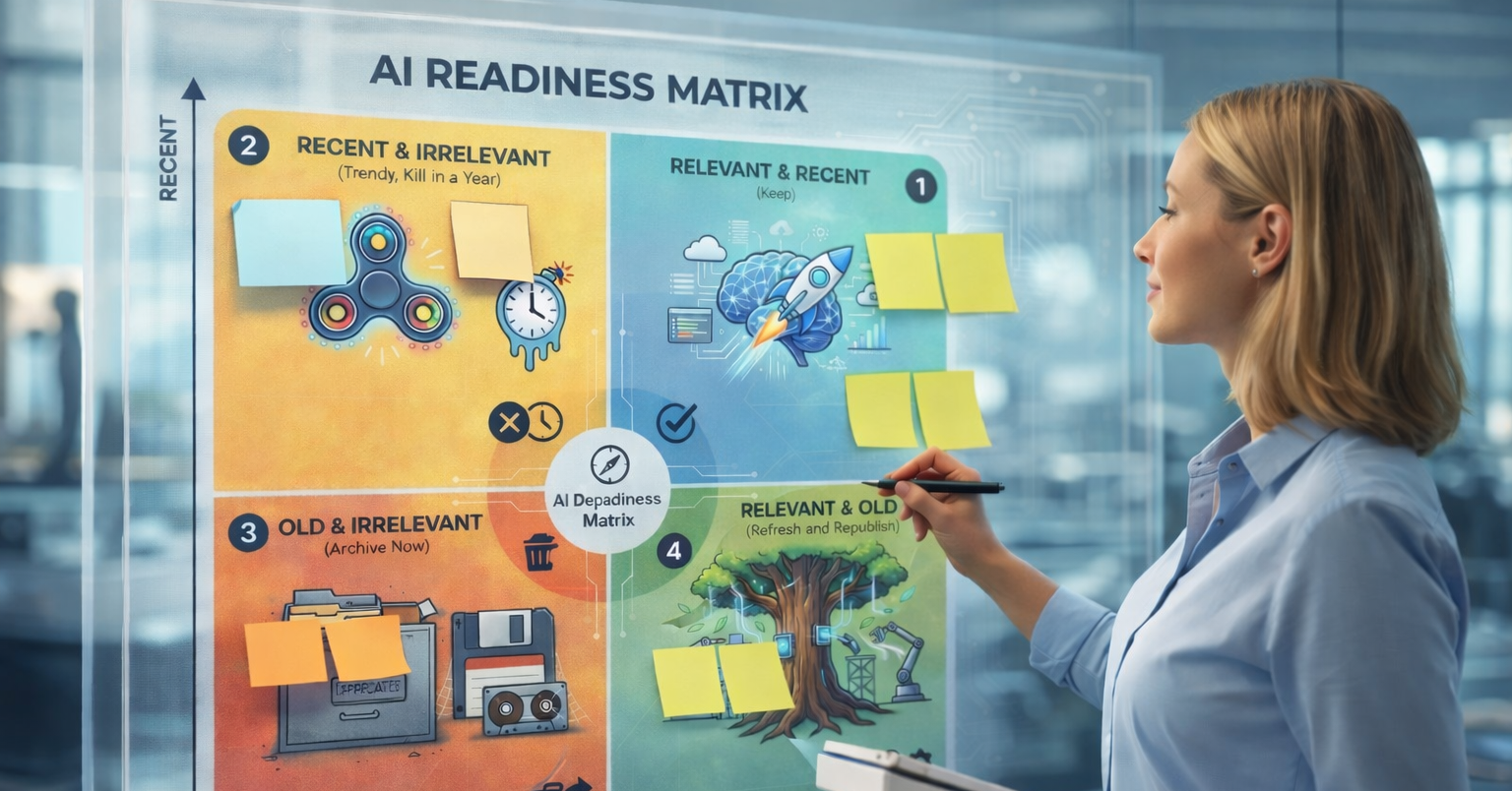
Pin this to your chrome browser, draw it on your whiteboard, whatever floats your boat, but this framework is going to be the Obi-Wan guide to your content creator Luke Skywalker from now on. Simple and powerful, meet the AI Readiness Content Matrix:
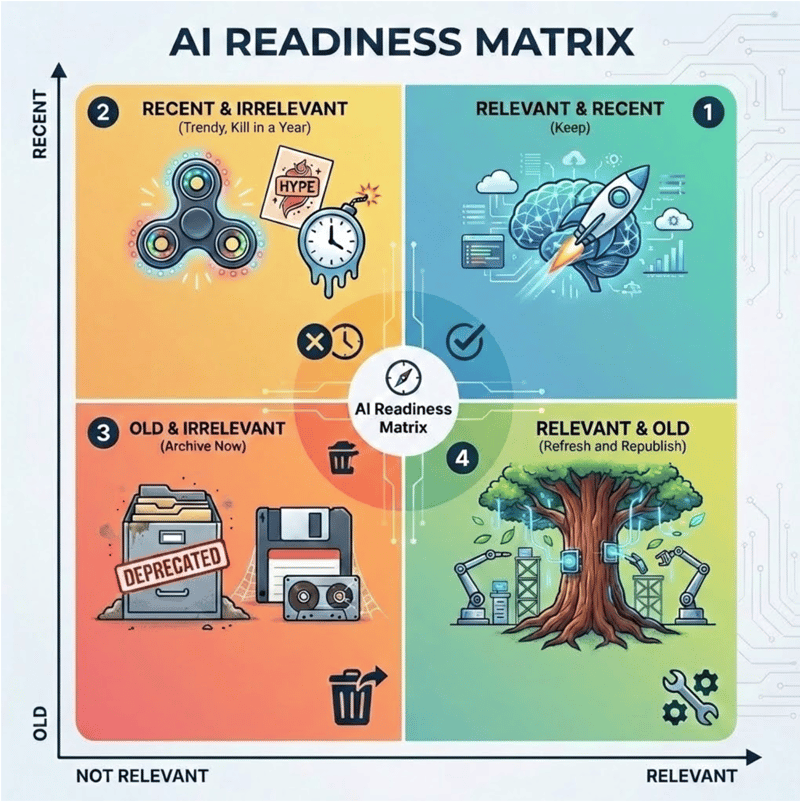
In 2026, content performance depends on two factors: relevance and recency. Marketers can use this AI Readiness Matrix to prioritize what to content to refresh, what to archive, and what to double down on so both humans and AI can discover your best work.
You’ve got this.
What’s your website’s AI visibility score? If you’re wondering how to get seen and cited by LLMs like ChatGPT and Perplexity, you’re in the right...

The last few years at HubSpot’s annual INBOUND conference have been “all about AI.” This year? Inbound 2025 was less hype and more real-life...

Marketers and business owners like you are asking: how can I get more eyeballs on my product or service in this new age of AI? What is Answer Engine...